rod goodman

Biographical Sketch

Research Interests

Curriculum Vitae (pdf)

Publication List (pdf)

Online Publications

PhD Alumni

Contact Information

Sailing!

circuit


Rodney M. Goodman B.Sc., Ph.D., C.Eng., FIEE, FIEEE.

Carnegie Centenary Professor, University of Edinburgh, Scotland, UK.

Biographical Sketch:

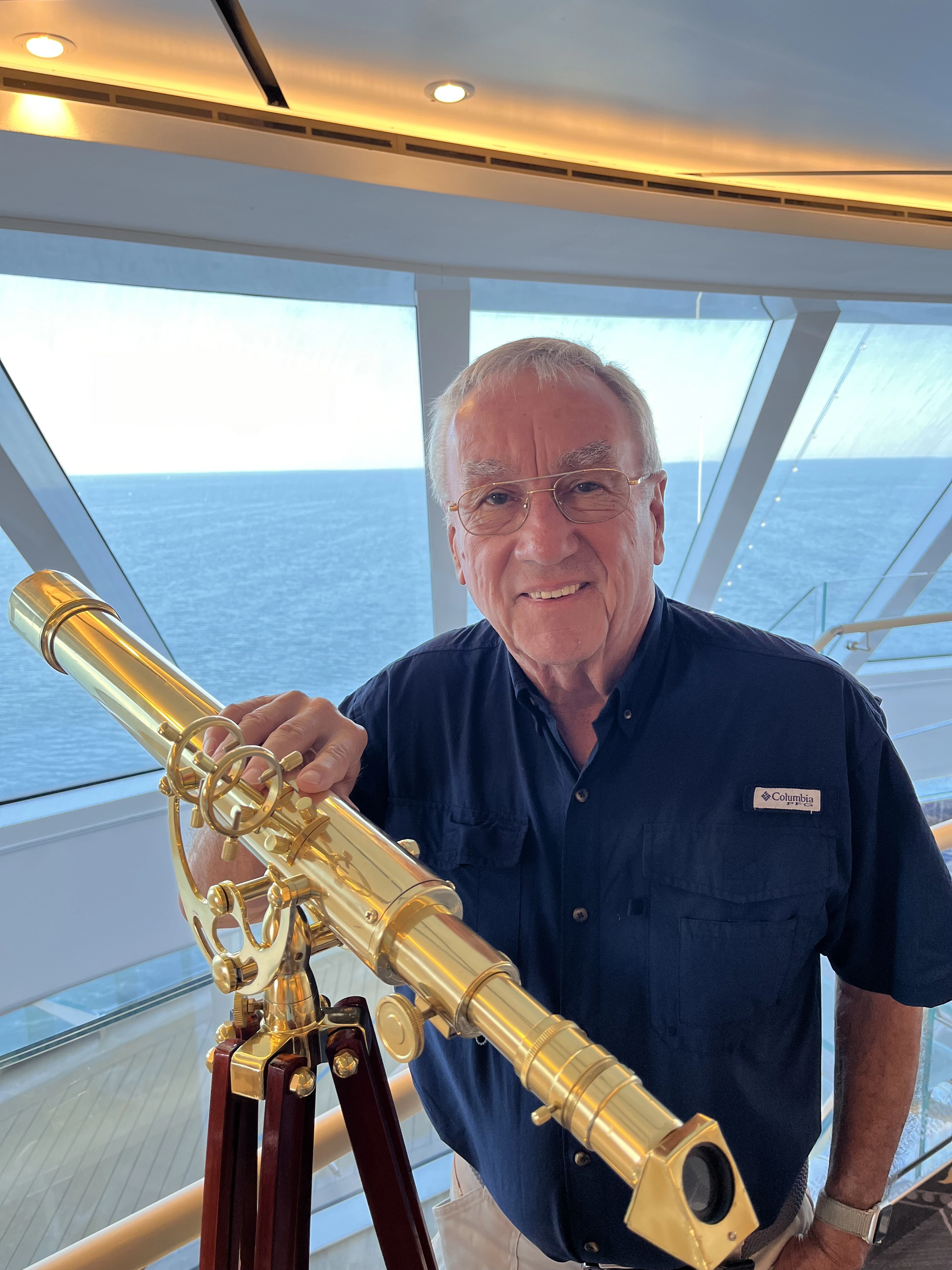
Rodney M. Goodman was born in London England. He received his B.Sc. degree with Honors in Electrical Engineering from Leeds University Yorkshire, UK in 1968, and his Ph.D. in Electronics at the University of Kent at Canterbury, UK in 1976. Dr. Goodman is a Fellow of the IEEE, and a Chartered Electrical Engineer and Fellow of the IEE.

From 1975 to 1985 Dr. Goodman was a member of the faculty of the Department of Electrical and Electronic Engineering at the University of Hull, UK.  In 1985 he joined the faculty of the California Institute of Technology where he was Professor of Electrical Engineering until September 2001. Dr. Goodman left Caltech to focus on his entrepreneurial activities, taking up the position of Vice President of Nano-Technology at Cyrano Sciences, the electronic nose company, of which he was a founder (now a divison of Smiths Detection). Currently, Dr Goodman is Chief Technology Officer of InfinID Technologies Inc., an RFID solutions company, and is President of Gaea Corporation, an R&D consulting company. He is also a Board Member and Consultant to several other advanced technology start-up companies in the Pasadena area. Dr Goodman holds the positions of Visiting Professor in the Faculty of Computing, Engineering and Mathematical Sciences at the University of the West of England , UK, and 2008 Carnegie Centenary Professor at the University of Edinburgh , Scotland, UK.

Dr. Goodman's current research interests are in intelligent information processing systems, electronic nose technology, distributed communications networks of sensors and actuators, ultra wideband wireless, ad-hoc networks, RFID and RTLS. In addition, novel control architectures for multiple autonomous mobile robots, and machine consciousness are being pursued.

The Goodman research lab at Caltech comprised three groups: the Collective Robotics Group (CORO), the Information Processing Systems Group, and the Neuromorphic VLSI Processing Group. While at Caltech Dr. Goodman developed new error control coding algorithms for VLSI memories which have been implemented on spacecraft missions, and various neural network VLSI implementations, including: neural associative memories with large capacity, artificial MEMS skin chips, and the Caltech silicon nose chip. He also developed new expert system technologies that have been successfully transferred to industry for control and management of communications networks. These include a new class of rule-based neural networks, which feature explicit knowledge in the form of human understandable rules.  Robotics activities were focused towards swarm intelligence and collective robotics.

Dr. Goodman was the founding PI of the National Science Foundation's Center for Neuromorphic Systems Engineering at Caltech, and served as its director for the first two years of operation, and as director of industrial liaison thereafter. These are national centers of excellence, and the Caltech Center for Neuromorphic Systems Engineering, together with its educational component, the Computation and Neural Systems graduate degree program, is at the forefront of this field. The mission of this center is to develop the technologies necessary for endowing the machines of the future with the human-like senses of vision, audition, touch, and smell and taste (chemical sensing), and applying these to autonomous robots.

Dr. Goodman has consulted for a variety of government and commercial organizations in both the US and the UK, and has a current US Secret Clearance. He is a founder of five advanced technology research and development companies in both the US and the UK, and is currently a consultant to several high technology companies in the Pasadena area.

Dr. Goodman is a Fellow of the IEEE, and a Chartered Electrical Engineer and Fellow of the IEE. His honors and awards include two NATO Senior Scientist Awards and a Research Fellowship of the Royal Society. Dr Goodman has served as North American editor of Neural Computing and Applications, and has served as a reviewer for various IEEE (U.S.A.), and IEE and IERE (U.K.) journals including: IEEE Transactions on Information Theory, Computers, Neural Networks, Pattern Analysis and Machine Intelligence, Proceedings of the IEEE, Proceedings of the IEE, Electronics Letters, and Neural Computation. Dr Goodman has served on various organizing and program committees for: IEEE International Information Theory Symposium, Neural Information Processing Systems (NIPS), NIPS Foundation, International Joint Conference on Neural Networks (IJCNN), Neural Networks for Computing/Machines that Learn (Snowbird), IFIP International Symposium on Integrated Network Management (ISINM), International Symposium of Circuits and Systems (ISCAS), International Workshop on Applications in Neural Networks in Telecommunications (IWANNT), Frontiers in Distributed Information Systems ( FDIS ), and the International Workshop on “ Can a Machine be Conscious ”, Cold Spring Harbor. Dr. Goodman has published over 150 technical papers and patents in his areas of expertise.  

top